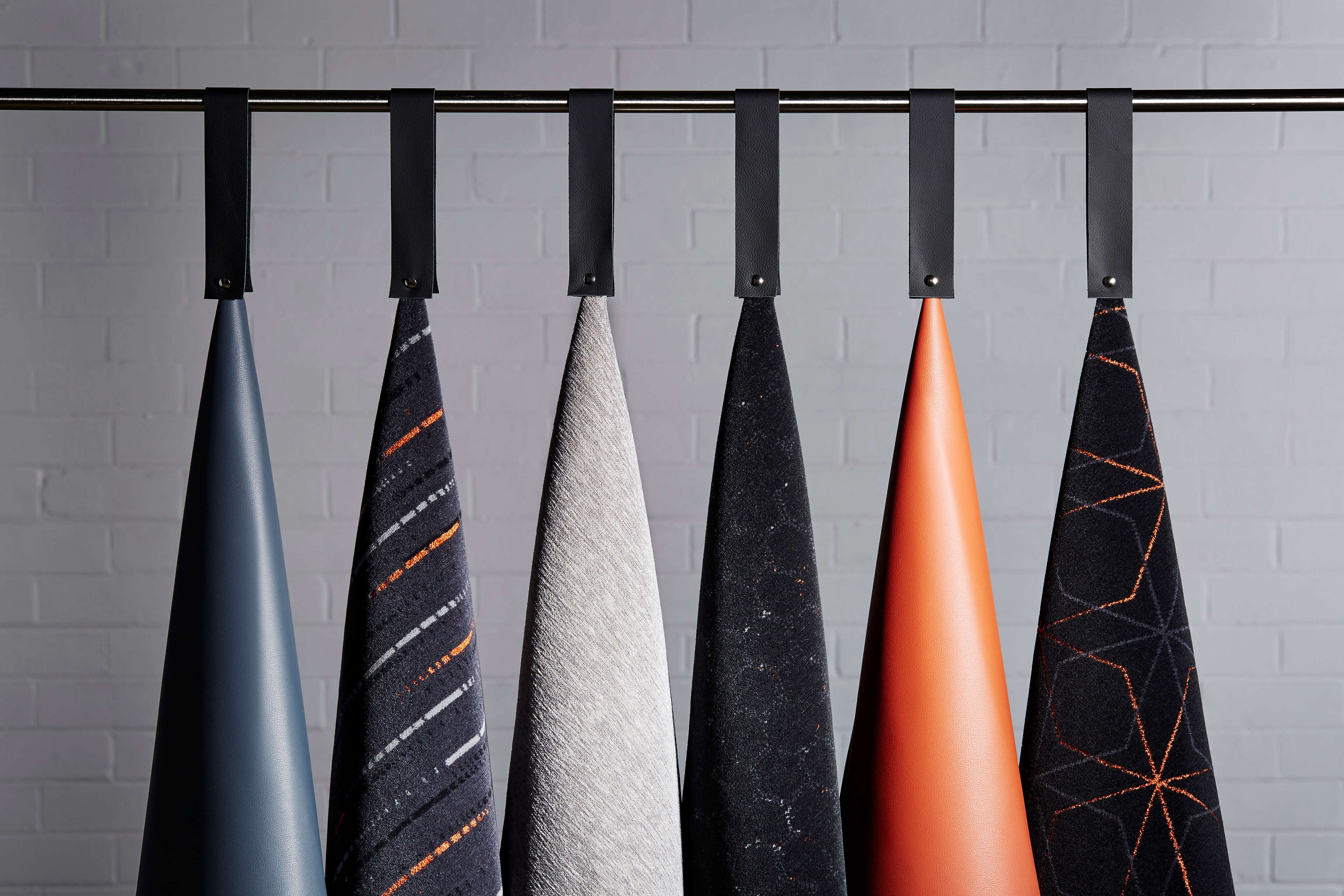
It Shouldn't Be a Hard Choice
What if we've been asking the wrong question about fabric vs plastic seating on mass transit?
As transit agencies across North America rethink the future of passenger seating; comfort and cleanliness are frequently positioned as opposing choices.
But does it have to be that way? Ahead of APTA EXPO 2026, this article explores the evolving expectations of riders vs the operational demands that transit agencies face, both now and in the future.
It Shouldn't Be a Hard Choice.
For many, the conversation centres on cleanliness. Hard surfaces, vinyl and plastic seating are often perceived as easier to maintain, easier to disinfect and easier to keep looking clean. Some operators have already begun making the switch.
But comfort still has a place in the discussion.
Metrolinx recently selected fabric upholstery for its new light rail vehicles, citing comfort, warmth, friction, durability and ease of cleaning among the reasons for retaining fabric seating. It's a powerful example because it challenges the long-held assumption that comfort and operational performance are mutually exclusive.
At the same time, discussions in Boston have highlighted another side of the seating debate. Recent coverage of the MBTA's historic Red Line seat fabric sparked widespread interest from passengers who viewed the upholstery as more than simply a functional material. For many riders, it represented comfort, familiarity and a connection to the everyday journey, demonstrating how something as simple as a seat can shape the emotional experience of public transport.
That raises an important question.
Is the challenge about making seats easier to clean, or is it about delivering environments that feel clean while still providing the comfort passengers want and expect?
Passenger experience is shaped by countless small interactions. The texture of a seat. The warmth of a surface on a cold morning commute. The feeling of comfort during a long journey. These details influence how people perceive public transport, whether they consciously recognize it or not.
Comfort is not simply about cushioning. It encompasses tactile comfort, thermal comfort, wellbeing and the overall perception of quality. A seat is often the primary point of contact between passenger and vehicle, making it one of the most influential elements of the journey experience.
For years, the debate has been framed as a choice:
Fabric equals comfort. Hard surfaces equal hygiene.
But advances in transport textiles challenge that assumption.
Today's upholstery fabrics can be engineered to be highly durable, stain resistant, easy to clean and suitable for demanding transit environments, while continuing to deliver the comfort, warmth and visual appeal that hard surfaces often struggle to replicate.
Perhaps the future of passenger seating isn't about choosing between comfort and cleanliness.
Perhaps the real challenge is delivering both.
As the industry continues to evolve, it may be time to ask whether hygiene and passenger comfort should be competing priorities at all.
After all, the most successful public transport systems aren't simply efficient. They're inviting.
This article references reporting from CBC News' "Inside the weird world of Toronto's transit seat upholstery" and recent reporting on public reaction to historic MBTA Red Line seat fabrics in Boston and reporting and photos from Metrolinx.com.