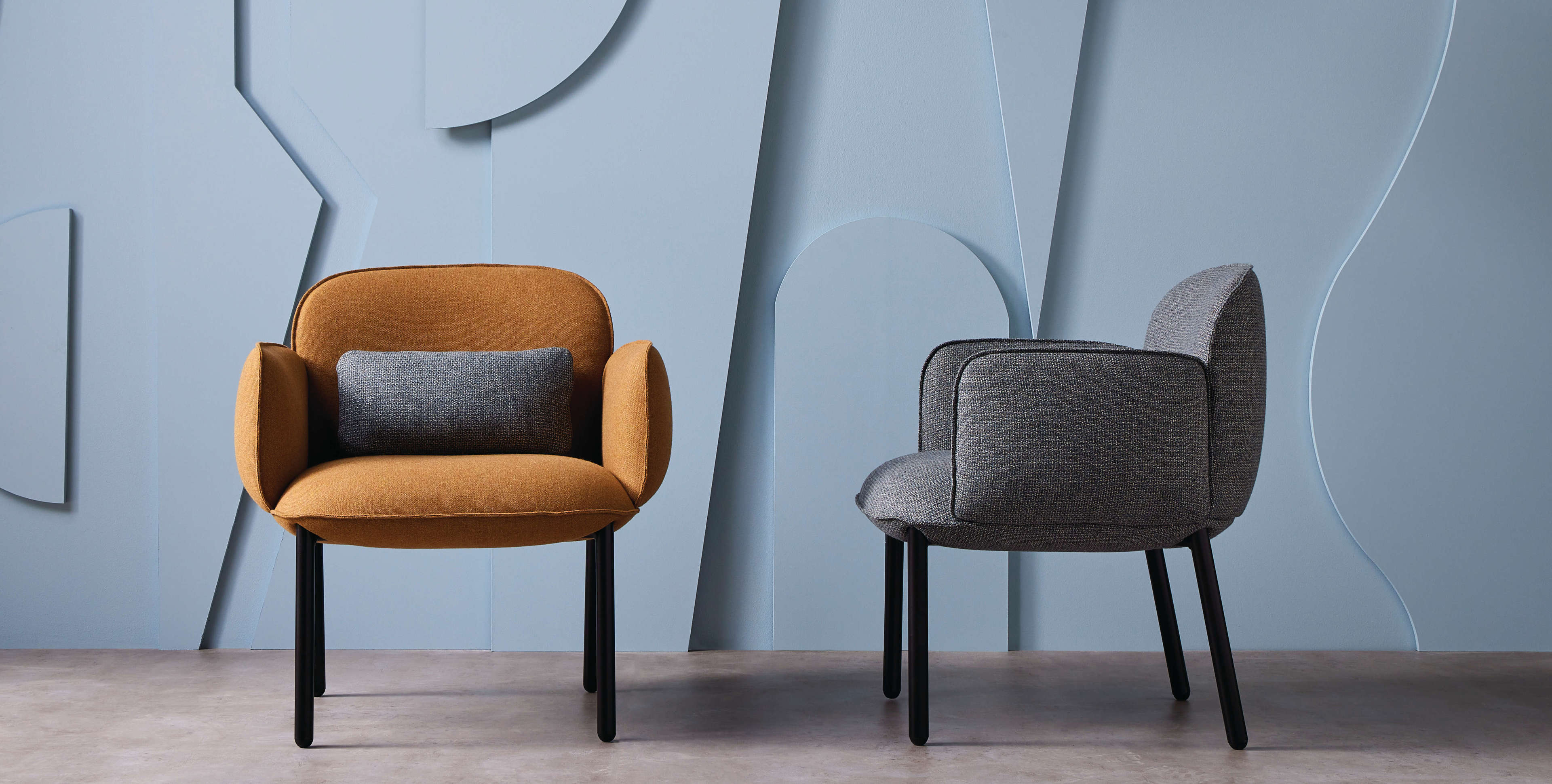
Upholstery fabrics
Whether you're specifying fabrics for workplace furniture, hospitality interiors, education, healthcare or public spaces, choosing the right upholstery fabric is about far more than appearance. Durability, fire performance, sustainability, comfort and long-term value all play a role in creating interiors that perform beautifully throughout their lifetime.
At Camira, we design and manufacture contract-grade upholstery fabrics that combine exceptional technical performance with inspiring colour, texture and design. From naturally renewable wool fabrics to textiles made with recycled materials, our collections are trusted by furniture manufacturers, architects and interior designers across the world.
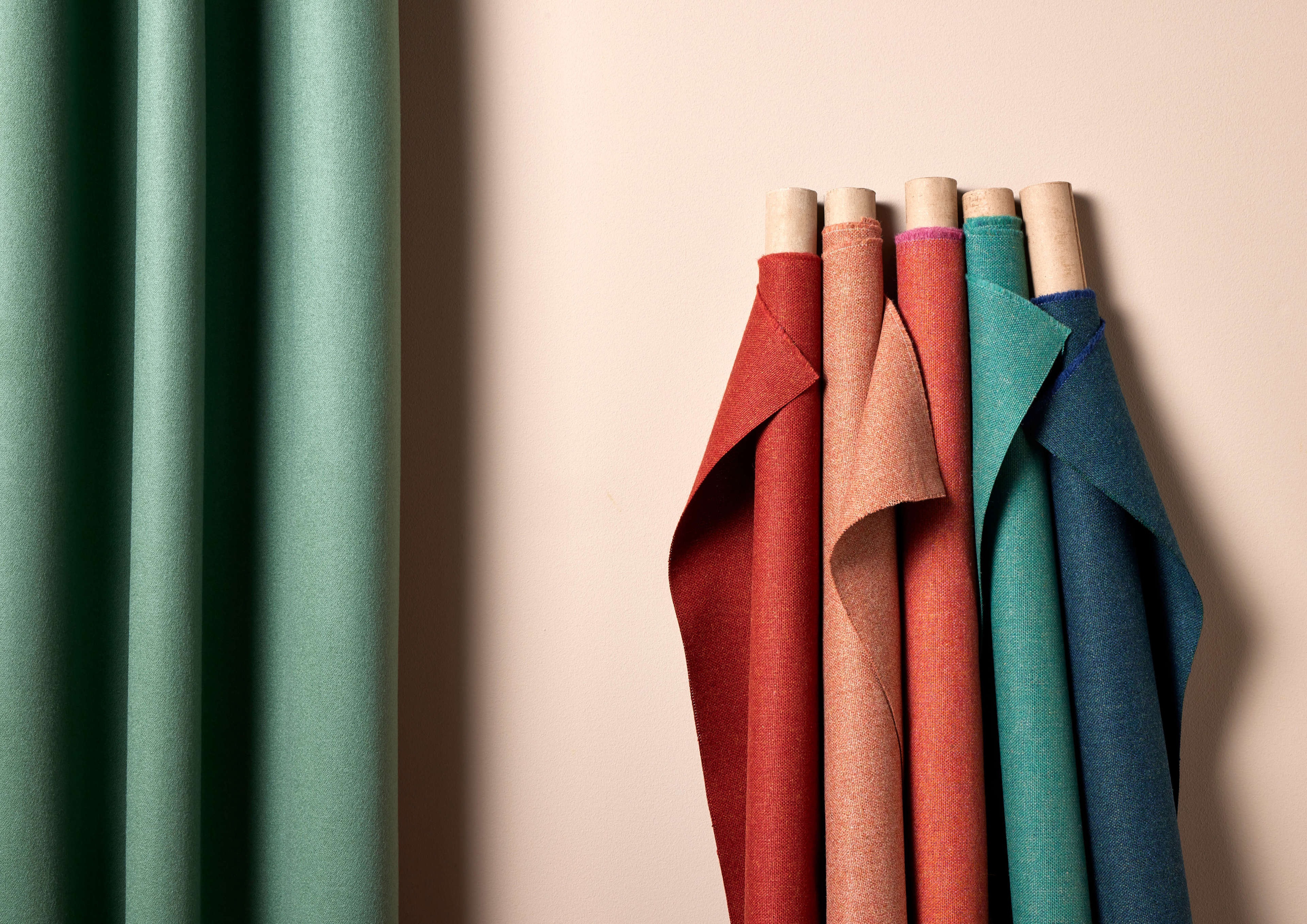
What is Upholstery Fabric?
Upholstery fabric is the textile used to cover different kinds of seating and furniture, providing both aesthetic appeal and functional performance. While domestic upholstery often prioritises style, contract upholstery fabrics must also withstand intensive daily use, meet stringent fire safety standards and retain their appearance over many years.
Choosing the right fabric depends on how and where it will be used. A fabric specified for a busy workplace, a university lecture theatre or hospitality venue needs to perform differently from one selected for occasional residential seating. Factors such as durability, cleanability, fire retardancy, sustainability and colourfastness all contribute to selecting the most appropriate upholstery fabric for every application.
With more than fifty years of textile design and manufacturing expertise, Camira creates upholstery fabrics that balance impeccable design with proven performance, helping specifiers create spaces that are made to endure and stand the test of time.
How to Choose Upholstery
Fabric
Selecting upholstery fabric begins with understanding the demands of the environment in which it will be used and the type of furniture it will be used on. Every project has different requirements, but there are a number of key considerations that should guide your specification.
Composition
What a fabric is made from is arguably the starting point for upholstery specification. After colour and appearance, the composition governs many further attributes and technical performance. Broadly speaking, fabrics are either natural or synthetic, with each category further sub-divided. The material composition links directly to the fabric’s environmental characteristics, as well as certain technical specifications and long-term appearance retention.
Durability
Durability is typically assessed using the Martindale or Wyzenbeek rub test, which assesses a fabric's resistance to abrasion. Higher Martindale ratings can mistakenly be taken to indicate greater suitability for demanding environments, making them ideal for commercial seating, education, hospitality and transport applications where furniture experiences continuous use. Any abrasion result above around 30,000 rubs is suitable for severe contract usage in heavy demand areas.

Colours, Patterns and Fabric Styles
Colour and pattern bring interiors to life, helping transform a functional furniture specification into a distinctive design statement. Whether you're creating calm, understated environments or bold, expressive spaces, our upholstery fabrics offer exceptional creative freedom.
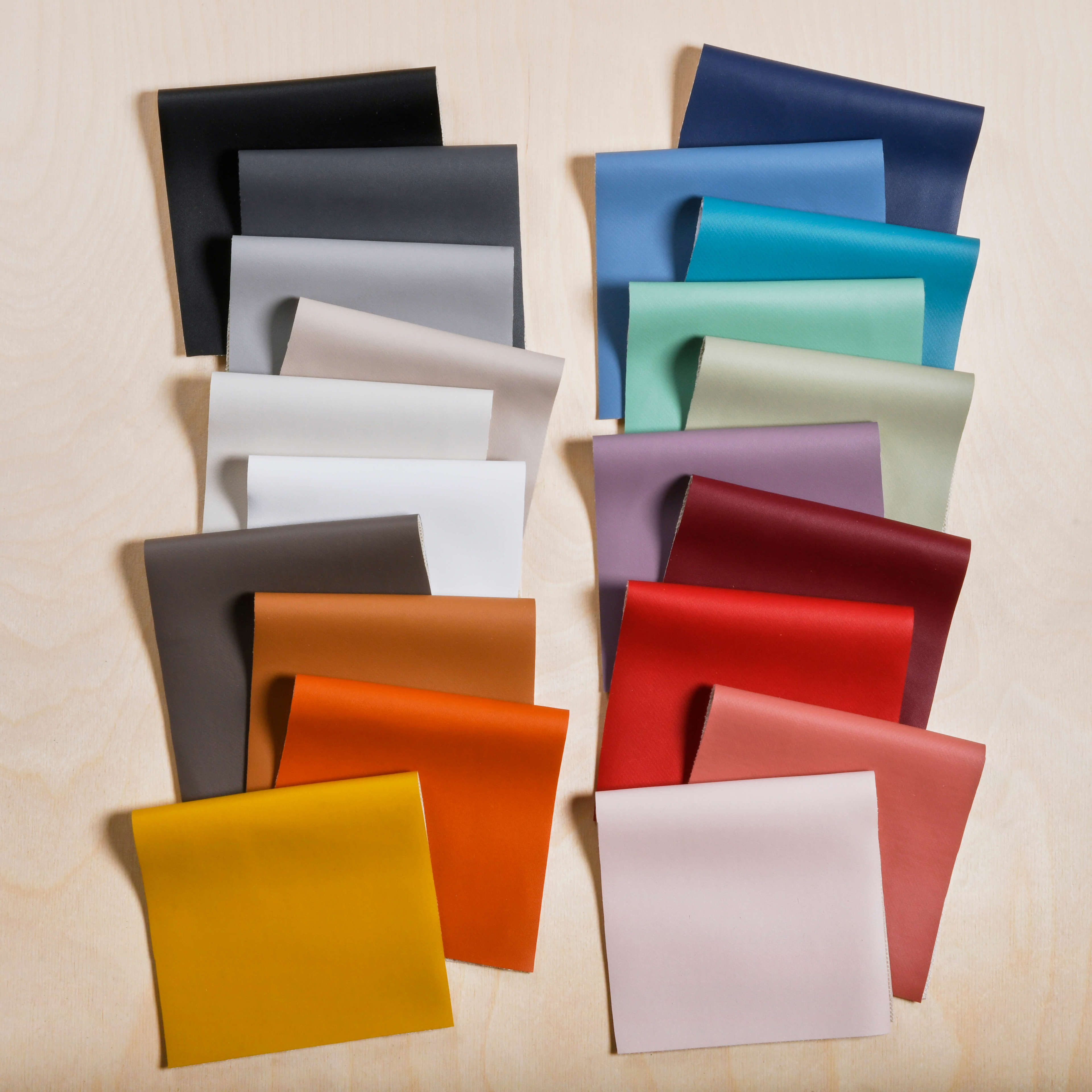
Our collections span the full colour spectrum, from timeless neutrals to vibrant statement shades, with some ranges, including Synergy, offering up to 75 coordinated colourways. Developed by our in-house colour specialists, every collection is designed to work beautifully both independently and together, making it easy to create harmonious schemes across different furniture types and interior applications.
With one of the industry's broadest upholstery fabric portfolios, you'll find a rich variety of textures, constructions and finishes. Choose from classic woven plains and sophisticated cross-colour dobby weaves, richly textured bouclés, premium worsted wool fabrics, classic wool felts, lightweight synthetics, jacquard designs, chenille fabric, velvets and velours. Our range also includes leather, faux leather, vinyl and coated fabrics, alongside stripes, checks, houndstooth, micro-patterns, contemporary motifs and decorative sheers and voiles, giving designers complete freedom to realise their vision.
Frequently Asked Questions
All Camira’s upholstery fabrics are extremely durable, hard wearing and long-lasting. Camira provides a guarantee of durability, with most fabrics coming with a 10 year wear warranty as standard. Mistakenly, many people think that Martindale or Wyzenbeek abrasion values are an indication of how long a fabric will last. Severe contract use is typically above 30,000 Martindale cycles, but beyond that value the numbers don’t tell the whole story. Premature wearing is usually the result of neglect or lack of care and maintenance, which can cause premature ageing when dust and dirt act as abradants which can cause added friction and weakening of yarn and fabric strength. The inclusion of nylon typically increases the abrasion performance, while polypropylene doesn’t manage to achieve such high numbers because the Martindale test generates heat which can degrade the fabric surface. Camira’s highest performing fabric for Martindale results is 24/7+, which achieves in excess of 400,000 cycles: 24/7 - Heavy Duty Seating Fabric | Camira. Wool blend Synergy Synergy - High Performance Upholstery Fabric achieves in excess of 100,000 cycles, as does recycled polyester Xtreme Xtreme - Crepe Weave Seating Fabric.
There are lots of beautiful fabrics in the Camira portfolio. The answer to “what’s best?” really depends on the type of furniture, the end use area it is being used in, and the specific technical standards it needs to meet, especially in relation to fire performance. For larger pieces of soft seating, such as sofas and settees, then natural fibres such as wool or wool-flax are flexible and pliable, perfect for upholstering around the curves and contours of furniture pieces. Simpler furniture such as task seating for computer operator chairs, works just as well in natural or synthetic fabrics. If you need a quick wipe down upholstery solution, for example in nursing or residential homes or spill-prone canteen areas, then vinyl or PU is a good option. Colour is important to think about too, so if you’re specifying for a heavy traffic area, then a darker colourway may be more forgiving, while lighter colours may fit the bill for more occasional use.
The amount of fabric needed for an upholstery project will vary depending on the size of the furniture. Simple task seating for computer chairs will require less than a metre, whereas larger sofas could take up to 10 metres. It’s worth checking the width of the fabric to try and establish the upholstery yield; the most common width for seating is 140cm, while some fabrics - usually for desk screens and vertical panels - are available in a wider width of 170cm.
Yes, Camira fabrics are flame retardant to different national and international flammability standards. The specific fire standards which a fabric achieves are all indicated within our technical specifications, which can be seen online on our website product pages, or on the back of swatch cards and samples. Fire performance is a very complex specialist area of expertise, with country and regional specific standards which are applied to different product applications such as seating, vertical surfaces (such as screens, panels and wrapped wallcoverings), as well as curtains and drapery. All Camira fabrics are certified for flame retardancy through independent testing houses and the third party certificates can be downloaded on our product pages or within our Resources library.
The Martindale test is one of the methods used to test abrasion in both Europe and North America. North America also uses the Wyzenbeek method. The aim of both Martindale and Wyzenbeek is to try and establish the breakdown of a fabric through surface rubbing. The end point, which establishes the abrasion value, varies between two and three threads broken depending on the actual test method employed; several individual samples are tested. Neither Martindale nor Wyzenbeek are true indicators of fabric durability and they cannot faithfully replicate how people sit on furniture in practice.
Classification of abrasion values depends on the classification method: under BS 2543, classifications range from Light Domestic at 15,000 cycles, to Sever Contract at 30,000 cycles. In North America, the Association for Contract Textiles (ACT) recommends 15,000 Wyzenbeek double rubs for low traffic or private spaces, or 30,000 double rubs for high traffic or public areas.
Camira provides a comprehensive guarantee of durability, with most fabrics being backed by a 10 year warranty against wear through or loss of colour.
There are various types of performance fabrics within the Camira portfolio, including waterproof and stain-repellant options. For the greatest level of protection in hospitality or healthcare settings, we would recommend choosing a vinyl or silicone fabric, such as Vita (in the UK and Europe), Port in North America, or Layer. These kinds of material are not only waterproof, but are also bleach cleanable and provide quick wipe down cleanability for infection control regimes. Fabrics within the Halcyon collection are woven from polyester, but include a performance backcoat and stain-repellant topical treatment. Some fabrics can also have a stain-repellant treatment applied as an option, with minimum quantities applicable and an added lead time.
Camira is a market leader in sustainable, environmental fabrics, offering both natural fibre fabrics and recycled fabrics. Natural fibre fabrics use materials which are grown annually rather than being man-made, including wool and wool blended with plant fibres from agricultural crops such as flax and hemp. These provide natural flame retardancy to higher level standards without the need for any additional chemical treatment. Recycled fabrics include post-consumer recycled PET made from plastic bottles, textile to textile recycled fabrics made from textile waste from fashion and furniture, and recycled wool. Camira provide two closed loop recycled wool fabrics, Revolution and ReSKU 2.0, as well as X2 which includes Camira’s polyester yarn and selvedge waste. Fabrics carry various third party certifications for environmental stewardship, such as EU Ecolabel, OekoTex Standard 100 for material ingredients and health, Indoor Advantage Gold for indoor air quality, and third party verified Environmental Product Declarations.
Upholstery fabric can be bought by the metre or by the yard, depending on the geography, either online or via our customer service or sales teams. We generally have large stocks to fulfil ex-stock quick ship delivery, enabling the smallest or the largest projects to be met quickly and efficiently. Samples can be ordered from the Camira website, with individual loose swatches available for all colourways. There are also digital image files available in multiple file formats and as high resolution tileable images.
Traditionally, the difference between contract and domestic upholstery fabric was considered to be the durability of the fabric, with contract-grade or commercial grade fabric seen as being more hard wearing to cope with heavier usage. Contract fabrics are typically used in areas such as office and workplace, education, hospitality and leisure, and healthcare settings. In the UK, there are certain differences in flammability standards too, where domestic fabrics must meet the Furniture and Furnishing (Fire Safety) Regulations 1988.